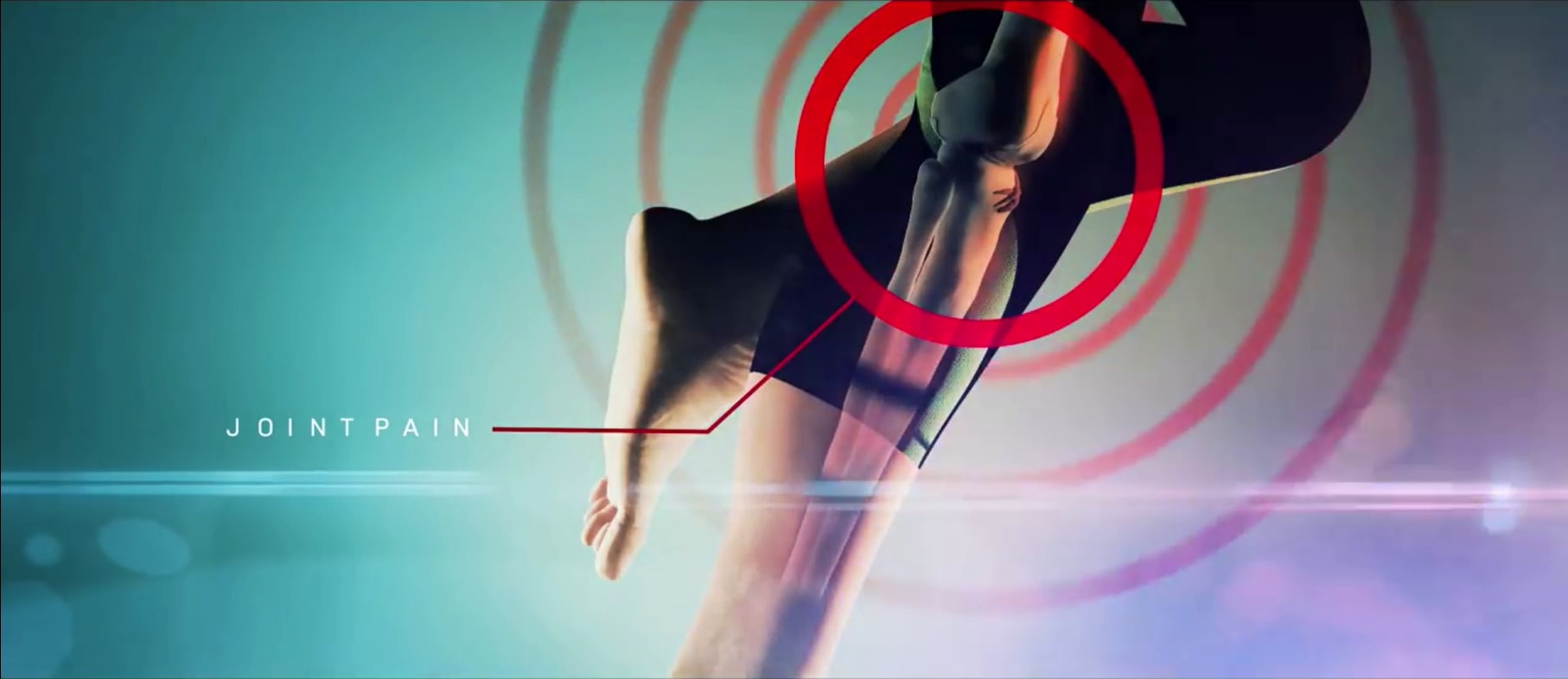
What is Osteoarthritis (OA)?
Joint pain and osteoarthritis
Most people are likely to experience joint pain at some point in their lives. Playing sports or engaging in other strenuous activities can contribute to acute pain and inflammation from overuse of the joint.
While serious injuries are relatively uncommon, chronic joint pain may progress into a more severe issue over time.
What is knee osteoarthritis (OA)?
Osteoarthritis is a type of arthritis that causes the cartilage in the knee joint to break down. Cartilage is a smooth, cushioning tissue that protects the bones in the joint. As OA progresses, the cartilage protecting the ends of the bones gradually breaks down, joint fluid loses its shock-absorbing qualities and bones may begin to rub against each other, causing pain, stiffness, and swelling.
Sometimes knee or hip pain caused by bursitis is confused with OA. There are some differentiators to look out for. Bursitis pain increases acutely when pressure is applied to the joint and gradually changes to a dull ache. Osteoarthritis pain comes on gradually and gets worse over time. However, people with OA may also get bursitis.
What causes knee osteoarthritis?
Several factors can increase the risk of developing osteoarthritis and impact the progression rate of OA over time.
Overuse
The most general cause of joint osteoarthritis is "wear and tear", categorised by overuse of the joint, leading to increased load or pressure, which further breaks down vital cartilage. However, this doesn't mean that you should avoid any unnecessary movement. Moderate activity is important as it strengthens the muscles, stabilises the joints, and supports the nutrition of the cartilage.
Body weight
Extra weight can add increased pressure on joints and often accelerates the degenerative process of cartilage breakdown, causing osteoarthritis. Maintaining a healthy body weight is the primary way to reduce your risk of developing OA.
Age
Age is a contributing factor in the development of osteoarthritis because the natural ability of cartilage to heal decreases as you get older.
Family history
Having a family history of arthritis may increase your likelihood of developing OA.
Past joint injury
Injuring your knee, and specifically damaging crucial ligaments, can cause cartilage degeneration to start much earlier or progress more rapidly. A torn anterior cruciate ligament (ACL), or other sustained ligament injuries, can cause an increased risk of developing knee OA within the following ten years.
What symptoms are associated with knee osteoarthritis?
The most common symptom of osteoarthritis is pain. The pain is usually worse with activity and may be relieved with rest. Other symptoms of osteoarthritis can include:
- Stiffness. The knee joint may feel stiff, especially in the morning or after sitting or lying down for a period of time.
- Swelling. The knee joint may be swollen, especially after activity.
- Difficulty walking or exercising. Knee osteoarthritis can make it difficult to walk long distances, exercise, get up and out of chairs, or use the stairs. The pain may be deferred or even appear in other areas of your body, such as back pain.
Creaking, crackly and popping sounds when the joints move has also been reported by people suffering from OA.
If you are experiencing any of these symptoms, especially if you have previously injured your knee, it is important that you talk to your doctor about OA.
How are the stages of Knee Osteoarthritis classified?
OA stages can be classified from x-ray evaluation in the Kellgren Lawrence grades KL 0 - KL 4:
- KL 0: No radiographic features of osteoarthritis
- KL 1: Possible joint space narrowing and osteophyte formation
- KL 2: Definite osteophyte formation with possible joint space narrowing
- KL 3: Multiple osteophytes, definite joint space narrowing, sclerosis and possible bony deformity
- KL 4: Large osteophytes, marked joint space narrowing, severe sclerosis and definite bony deformity
A more common description of the stages of osteoarthritis are mild, moderate and severe OA (stages 2 - 4).
Mild Knee Osteoarthritis
At this stage, the surface of the joint cartilage is beginning to breakdown and x-rays or MRIs of joints may show small bone spurs, cracks or indentations forming. With mild OA, you may experience pain or discomfort after a long day of walking. Wearing an ultra-lightweight brace could help prevent further breakdown while easing mild joint pain.
Moderate Knee Osteoarthritis
At this stage, the joint cartilage has broken down to the point that the bones are more frequently rubbing together. If you have moderate OA, you may experience pain while walking, running, bending, or using the stairs. Joint stiffness is commonly experienced after long periods of sitting or lying down. Inflammation of the joints is also reported following more strenuous activities.
Wearing a brace, such as Unloader One, could help delay the need for total joint replacement surgery.
Severe Knee Osteoarthritis
Severe OA is characterised by intense pain and discomfort during everyday activities. By this stage, the joint space between bones is significantly reduced because the cartilage has almost gone. The synovial fluid, which provides lubrication for joints, has decreased drastically and no longer reduces friction during movement.
Joint Replacement surgery is often the only viable treatment option for severe osteoarthritis. However, it is important to maintain a healthy weight and lifestyle to avoid complications during surgery. Wearing an Unloader One knee brace can help you to maintain a healthy lifestyle and manage your weight, making yourself a better surgical candidate.
How is Osteoarthritis diagnosed?
Only a trained medical professional can accurately and effectively diagnose osteoarthritis. If you are experiencing chronic knee pain and think it may be due to osteoarthritis, speak with your doctor as soon as possible.
Your doctor may ask you questions regarding the symptoms you are experiencing, such as knee or hip pain, and the impact on your daily function. Your doctor may also perform a physical examination of the affected joint(s), or take X-rays to help verify the diagnosis. This process may be repeated over time to better monitor the progression of the disease. Additional diagnostics could include further ultrasound, CT, and MRI scans.
An ultrasound is helpful to view a joint effusion and injuries to ligaments and muscles, without radiation exposure.
Computer tomography (CT) illustrates bony structures very well for your doctor and can be used to show even small fractures. For osteoarthritis, CT scans help evaluate bony alterations that may not show clearly on X-rays.
Magnetic resonance imaging (MRI) also works without radiation. MRIs show detailed sectional images of tissue, which is especially useful for ligament and meniscal injuries or injuries and changes to the joint cartilage.
If you do receive a diagnosis of OA, try not to worry. There are a number of options available to treat your condition, including our Unloader knee braces, clinically proven to relieve OA pain and activities of daily living.
How is Osteoarthritis treated?
With the right treatment, you can relieve your symptoms and improve your quality of life, despite osteoarthritis being a chronic (non-curable) condition. Managing OA symptoms is vital as it can slow down the progression of the disease considerably.
The main goals of OA therapy are pain relief, improvement in mobility, and preservation of the joint function. As osteoarthritis may present different symptoms in different people, it is necessary to work with your doctor to develop tailored osteoarthritis management plans.
However, there are many things you can do yourself or at home to improve your osteoarthritis pain:
- Stay active and exercise regularly. This will strengthen your muscles, stabilise your joints, and keep the cartilage hydrated.
- Eat well. Healthy nutrition is a big contributor to our overall well-being and has a positive effect on inflammation in our joints.
- Get the support you need for your joints early and don't suffer through the pain. Speak to your doctor or try an Unloader brace at an orthotist or clinic near you.
Find out more about treatments for osteoarthritis.